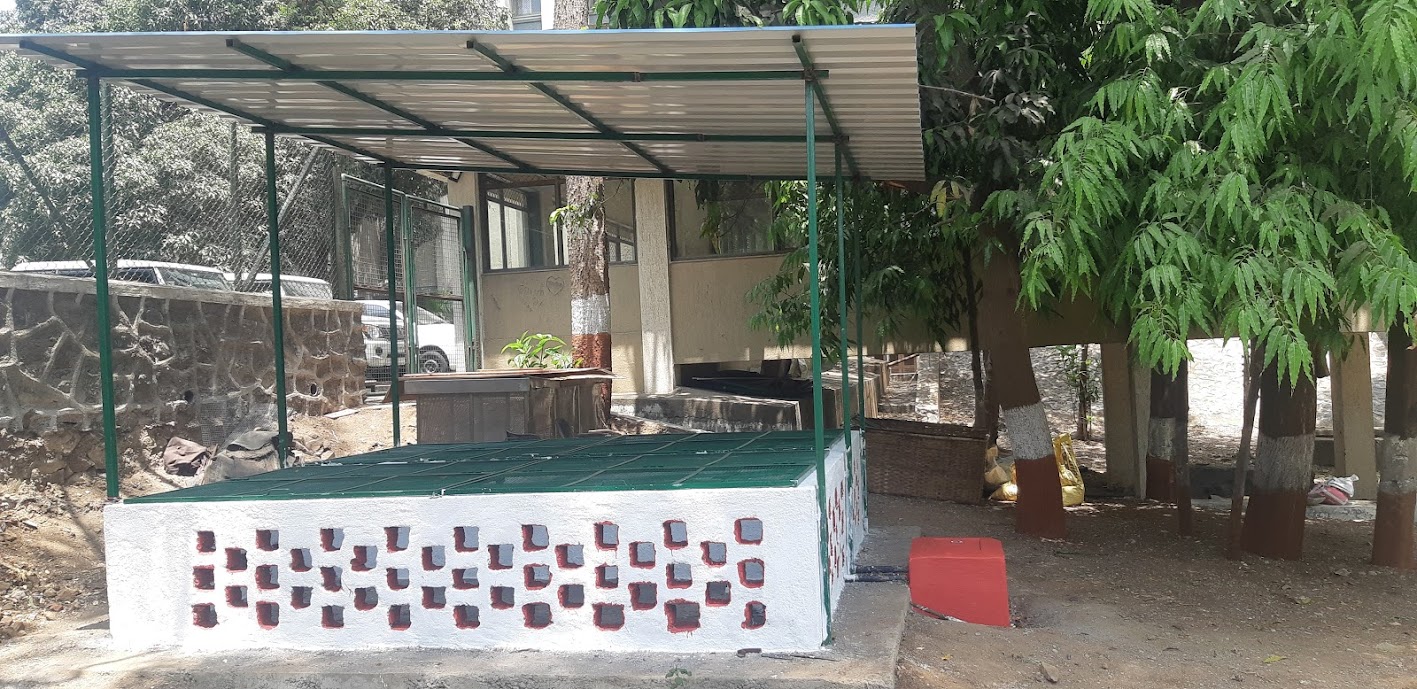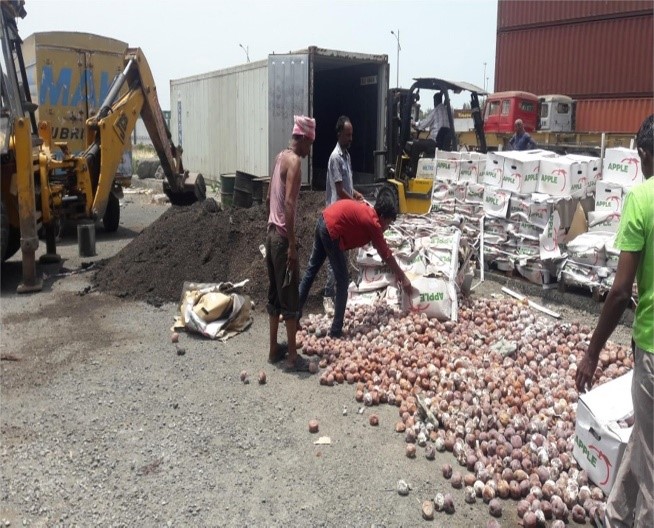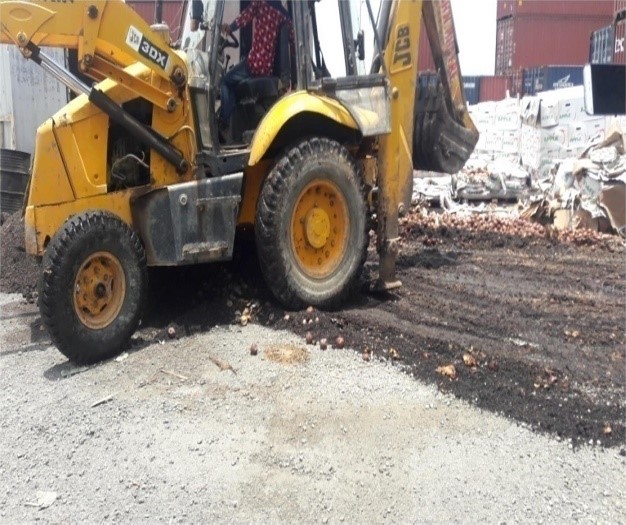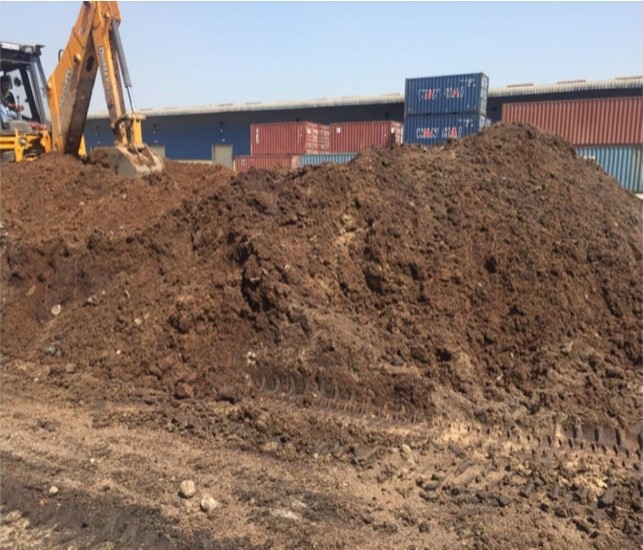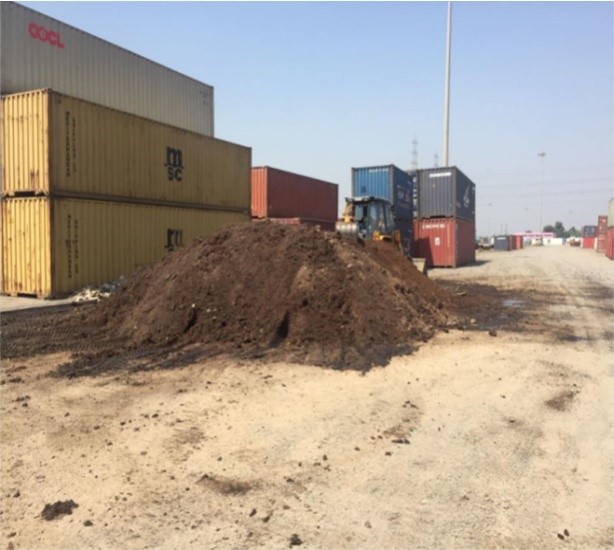
Perishable cargo rejected during import, export, or transfer requires rapid disposal because prolonged storage leads to spoilage, foul odor, pest infestation, and other operational and environmental challenges. To address this issue, BARC has developed an in-situ composting technology that enables the efficient biodegradation of rejected consumable cargo at ports, cargo terminals, APMC markets, and other handling facilities across the country.
The technology converts perishable waste into compost under ambient conditions, eliminating the need for refrigerated storage before disposal. It also avoids the high costs and environmental impacts associated with incineration, including the release of harmful gases. By providing a sustainable, cost-effective, and environmentally friendly waste management solution, the technology supports the safe and timely disposal of large volumes of rejected perishable cargo while promoting resource recovery through compost production.
Perishable cargo includes time-sensitive, mostly consumable goods that spoil rapidly if not stored under controlled temperature and humidity conditions.
BARC's In-Situ Composting Technology provides a sustainable solution for the safe disposal of rejected perishable cargo by converting it into high-quality compost under ambient conditions.
An In-situ composting technology employs a consortium of microorganisms (bacteria, fungi, actinomycetes) for the decomposition of biodegradable material in bulk. The materials that can be composted includes fruits, vegetables, soft drinks, oil, food items (such as cereal, grains, dairy products), bakery products etc. Its application shortens the duration of degradation from year or months to a few weeks. Additionally, it vastly reduces the cost of transportation involved in disposal of such condemned cargo. The compost generated in this process has high carbon content (28-36%), 1-2% nitrogen, and a high-water holding capacity (>150%). Application of this compost has a pronounced positive effect on soil health. The compost generated can also be used for subsequent batches of composting, making the process self-sustaining. Moreover, this technology, based on safe and beneficial microbes, is easily adoptable and will be an important contribution to the “Swachh Bharat Mission” of our country.
RAW MATERIALS
SPACE
MANPOWER
Manpower is required for segregation of biodegradable material from non-biodegradable material, and mixing of the available inoculums (2-5 persons). Actual manpower would depend on quantity of condemned perishable cargo material.